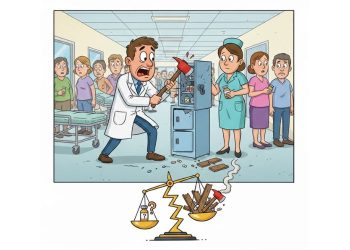



1. What does it mean to commit a crime under circumstances of mental provocation caused by the victim’s unlawful act?
According to the guidelines in Clause 6, Article 2 of Resolution 04/2025/NQ-HĐTP, committing a crime under circumstances of mental provocation caused by the victim’s unlawful act falls into one of the following cases:
– The offender is mentally provoked and influenced by the victim’s unlawful act, causing them to not be entirely self-controlled, rational, or self-restrained, leading them to commit the crime. The mental provocation must be immediate, caused by the victim’s unlawful act, resulting in the commission of the crime;
– In cases where the victim’s unlawful act is characterized by relatively heavy, repetitive oppression and suppression, and the provocation has been simmering and prolonged, and at some point the victim’s unlawful act recurs, causing the offender to be provoked and unable to restrain themselves, leading to the commission of the crime. In this case, if the aforementioned act is considered in isolation, it would not be deemed provocation; however, if the entire sequence of events is considered, it would be considered strong or very strong provocation, and thus the offender may be granted a reduction in criminal liability.
When applying this mitigating circumstance, the degree of reduction in criminal liability must also be based on the fault, the severity of the victim’s unlawful act, and the causal relationship between the victim’s unlawful act and the offender’s state of mental provocation.
This mitigating circumstance is only applied if the victim is the one who committed the unlawful act, and that unlawful act infringed upon the legitimate rights and interests of the offender or the legitimate rights and interests of the offender’s relatives. If the victim’s unlawful act did not infringe upon the legitimate rights and interests of the offender or their relatives, causing the offender to be mentally provoked, then it is not a basis for reducing criminal liability for the offender as stipulated in Point e, Clause 1, Article 51 of the Criminal Code.
Example: Nguyen Van A regularly drank alcohol, verbally and physically abused his wife and child, and smashed household items. On September 1, 2025, A continued to smash items, abuse his wife and child, Nguyen Van B; unable to control himself, B took a piece of wood and hit A’s head multiple times. As a result, A suffered bodily harm with a 65% injury rate. In this case, Nguyen Van B is eligible for the mitigating circumstance stipulated in Point e, Clause 1, Article 51 of the Criminal Code.
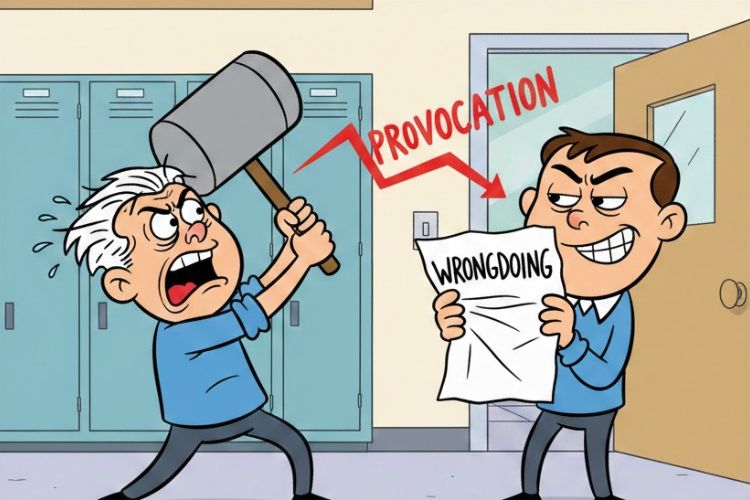
2. Is committing a crime under circumstances of mental provocation caused by the victim’s unlawful act a mitigating circumstance for criminal liability?
The mitigating circumstances for criminal liability are stipulated in Article 51 of the Criminal Code of Vietnam 2015 (amended by Points a, Points b, Clause 6, Article 1 of the Law amending the Criminal Code 2017) as follows:
– The offender has prevented or reduced the harm caused by the crime;
– The offender voluntarily repaired, compensated for damages, or remedied the consequences;
– Committing a crime in excess of the limits of legitimate self-defense;
– Committing a crime in excess of the requirements of an emergency;
– Committing a crime in excess of what is necessary when apprehending an offender;
– Committing a crime under circumstances of mental provocation caused by the victim’s unlawful act;
– Committing a crime due to exceptionally difficult circumstances not caused by oneself;
– Committing a crime that has not yet caused harm or has caused minor harm;
– Committing a crime for the first time and falling into the category of less serious offenses;
– Committing a crime due to being threatened or coerced by another person;
– Committing a crime under circumstances of limited cognitive ability not caused by their own fault;
– Committing a crime due to backwardness;
– The offender is a pregnant woman;
– The offender is 70 years of age or older;
– The offender is a severely disabled or especially severely disabled person;
– The offender is a person with an illness that limits their cognitive ability or their ability to control their behavior;
– The offender made a voluntary confession;
– The offender genuinely declared, repented, and showed remorse;
– The offender actively cooperated with competent authorities in detecting crimes or in the process of resolving the case;
– The offender performed meritorious service to atone for their crime;
– The offender is a person with outstanding achievements in production, combat, study, or work;
– The offender is a person who rendered meritorious service to the revolution or is the father, mother, spouse, or child of a martyr.
Thus, committing a crime under circumstances of mental provocation caused by the victim’s unlawful act is considered a mitigating circumstance for criminal liability.
3. Some notes when applying mitigating circumstances for criminal liability
– When deciding a penalty, the Court shall base its decision on the provisions of the Criminal Code, considering the nature and degree of social danger of the criminal act, the offender’s personal background, mitigating circumstances, and aggravating circumstances for criminal liability.
– The Court may decide on a penalty below the minimum level of the applicable penalty framework but within the immediately lighter penalty framework of the article when the offender has at least two mitigating circumstances specified in Clause 1, Article 51 of the Criminal Code of Vietnam 2015.
– Mitigating circumstances applicable to a particular accomplice shall only be applied to that individual.
– Mitigating circumstances already specified in this Code as elements for defining a crime or its framework shall not be considered as mitigating circumstances when deciding a penalty.
– When sentencing imprisonment for not more than 03 years, based on the offender’s personal background and mitigating circumstances, if it is deemed unnecessary to enforce the prison sentence, the Court may grant a suspended sentence and set a probation period from 01 to 05 years, during which the offender must fulfill obligations as stipulated by the Law on Criminal Judgment Enforcement.